

CASE STUDY
Meet Moon Weyhan Smith, one of ORN’s first certified trainers for the Know Your Naloxone Tools for Tribes curriculum. Smith lives in New Mexico but is originally from Long Island, NY, and is part of the Shinnecock Nation. Weyhan means Moon in the Eastern Algonquian language family, specifically the Mohegan-Pequot-Shinnecock dialect.
Currently, Smith works at Santa Fe Recovery Center in NM, as the Director of Community Engagement, leveraging his experience as a certified peer support worker and licensed addiction counselor to facilitate groups, conduct outreach, and deliver training to people of all ages. He is passionate about supporting people with opioid use disorders (OUD) and other substance use disorders, hosting talking circles, integrating cultural healing, and more. He wants to “give back the gift that was given to him.”
Sowing Seeds of Wellness: Overdose Prevention and Naloxone Saturation Mapping
Smith was first introduced to ORN in 2023 while working at the Albuquerque Area Indian Health Board in the “Sowing Seeds of Wellness (SOW) Program,”. He was tasked with conducting community trainings, and through this work connected with Shelley Mann-Lev, a consultant for the Southwestern ORN Team. Mann-Lev recognized Smith’s dynamic engagement and speaking skills and referred him to ORN to become a consultant. This sowed the seed for his future involvement with ORN, particularly in support of a training initiative that began at ORN in 2024—Naloxone Saturation Mapping for Indigenous Communities.Smith also collaborated with ORN to deliver a cultural opening for the ORN’s TOR Webinar series.
Enriching the Soil with a Train the Trainer Model
Throughout 2024, discussions within ORN were held to determine how to support a more comprehensive implementation of this resource into native communities, particularly inspired by the First Nation Health Authority’s Not Just Naloxone Train the Trainer Program.
After several months of collaborations between Andrea Medley, an ORN consultant and the Behavioral Wellness Educator who co-developed the curriculum for the Not Just Naloxone training at First Nation Health Authority, and addiction researchers, including Jermaine Jones, PhD and Felipe Castillo, MD from Columbia University Department of Psychiatry, ORN’s Know Your Naloxone Tools for Tribes was launched. The first training of the trainer for this curriculum was conducted in Albuquerque, New Mexico in spring 2025, in which Smith participated, officially becoming an ORN Naloxone Saturation Mapping trainer.
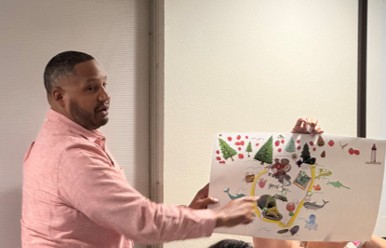
Moon sharing a map of his community at the Naloxone Saturation Mapping training in Albuquerque, April 2025.
Cultivating Resilience with Training and Technical Assistance
Train the Trainers
Following the first training, one of the curriculum developers and original facilitators from ORN’s Indigenous Communities Response Team, Veronica Sanchez, MSW, DSW, asked Smith to co-present with her for a training in Nashville, TN. This served as a mentorship opportunity to sharpen his skills and better prepare him to deliver the full training to other communities. The training was well-received, with one of the participants at the training requesting Smith to deliver the full Know Your Naloxone Tools for Tribes training to their clinical in South Carolina. Afterwards, Smith partnered with Stephanie Stilwell from the ORN Indigenous Communities Response Team to deliver the full training later that same year in Minnesota to others working in Indian Country.
Technical Assistance Requests
After delivering these three comprehensive Train the Trainer session for the Smith was determined to further the naloxone saturation mapping and overdose prevention program across Indian country through other TA requests. He delivered two presentations for ORN on culture and connection for the Choctaw Reservation in Mississippi at The Yellow Brick Road Conference, which focused on youth substance use prevention. He integrated ceremonial tribal exercises throughout the conference alongside key insights and lessons from naloxone saturation mapping and overdose prevention.
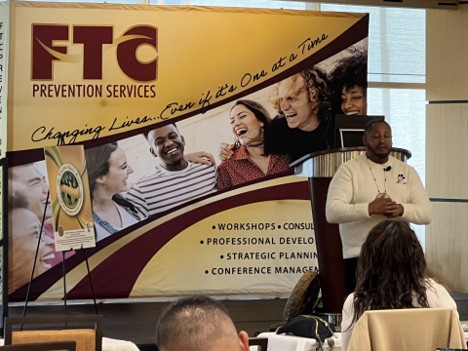
In 2026, Moon delivered another culture and prevention training to the peers at the Catawba Health Service Unit, blending in key components of the Know Your Naloxone Tools for Tribes curriculum.
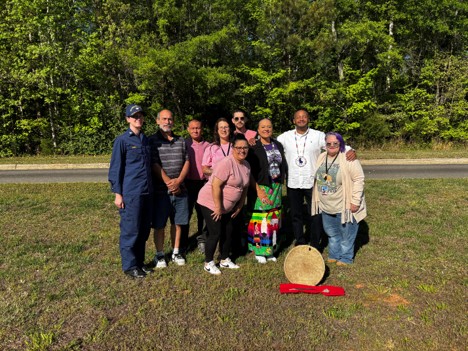
Catawba Nation and Service Unit, Peer Recovery Group. Pictured second from the right is Weyhan “Moon” Smith.
Spreading More Seeds of Overdose Prevention for Improved Community Health
Outside of the formal trainings, Smith has also been able to integrate the knowledge and tools from ORN’s Know Your Naloxone Tools for Tribes informally through community connections. He has been able to continue to work more closely with the Choctaw community, participating in talking circles and in their Native Youth Conference—demonstrating a deeper sustainability of the new knowledge from Naloxone Saturation Mapping, going beyond single trainings into stronger relationships and community-building. Moon enjoys being a recurring guest and trusted community resource. Building relationships is one of the most important factors he recognizes in establishing a network. He shares that “there is no outcome [expected]; there is just enjoying the presence and benefits of getting to know one another.”
In his local community, Smith’s relationship with another northern New Mexico Tribe, Ohkay Owingeh, also demonstrates the impact of ORN’s Know Your Naloxone Tools for Tribes curriculum beyond formal training. He participates in community events and answers questions about opioid overdose prevention and naloxone, specifically sharing hotspots of overdoses in the community (a tool learned specifically from that original training). This sharing of knowledge demonstrates the impact of the training and knowledge he developed as a result of the curriculum, even if they are not formally part of a presentation or technical assistance request. Building sustainability long term throughout his community is key.
Moon Smith was only one of over 50 participants in the Know Your Naloxone Tools for Tribes training. This train-the-trainer program has had a major impact in providing overdose prevention education in native communities across the nation.